
Skip to content
Smartphones and a tablet showing holographic globe and digital icons on a desk.

What Is Technology? A Clear Definition

In everyday speech, technology can mean a smartphone, a factory robot, or “anything modern.” In a clearer sense, technology is the practical use of knowledge to achieve a goal by shaping the world through tools, methods, and organized systems. That definition is broad on purpose, because software and… 
Test tubes filled with colorful liquids and a scientist holding a flask on a lab bench.

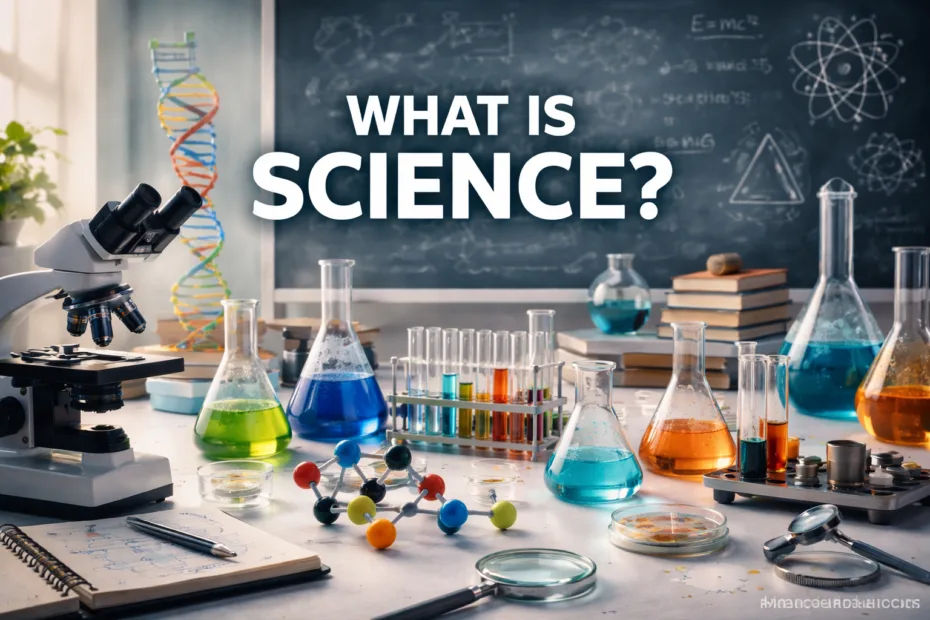
What Is Science? Core Principles Explained

Science is a method for building reliable knowledge about the natural world—from cells and storms to planets and materials—by using evidence and disciplined reasoning. It is not a single “magic procedure,” and it is not a collection of facts frozen in time. Science is a self-correcting practice: ideas… 

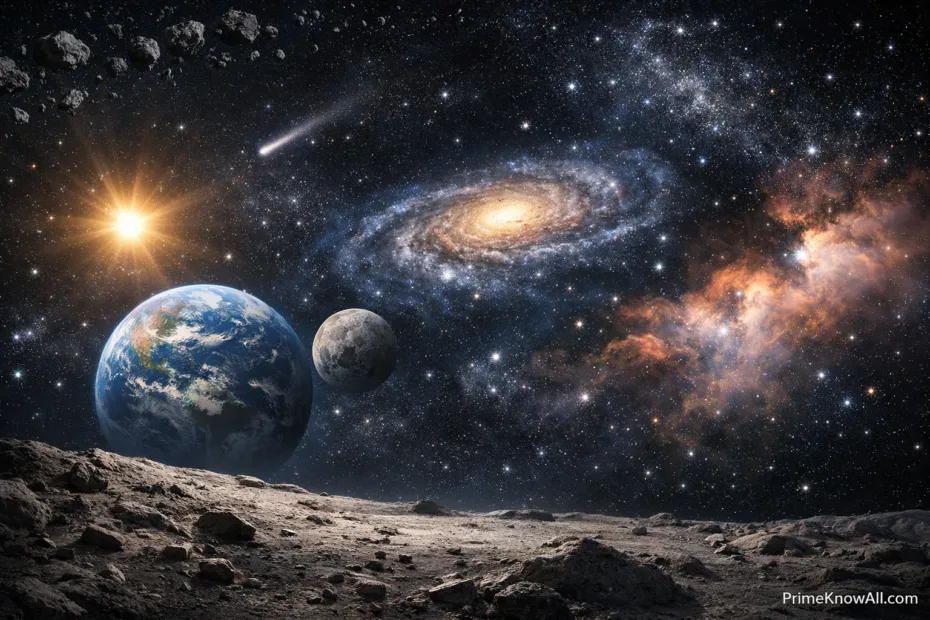
Starry sky with planets and a distant galaxy in the background about what is space

What Is Space? A Basic Explanation

In everyday language, space means the region beyond Earth’s air where the sky turns black and breathing becomes impossible. In physics, it is a real environment with extremely low density, filled with faint gas, charged particles, dust, light, magnetic fields, and the pull of gravity. It is often… 

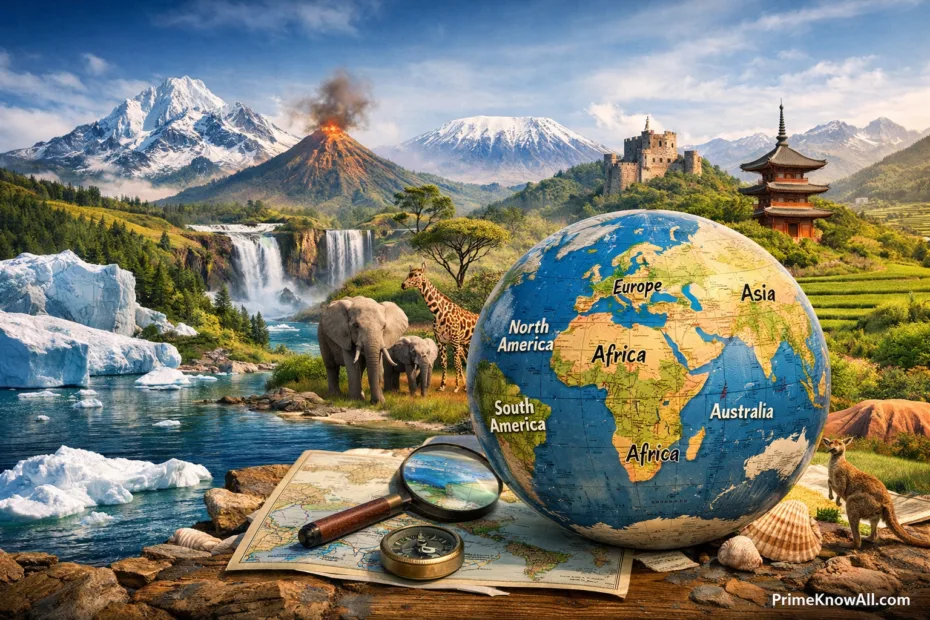
A colorful map showing the continents of the world with a compass and a globe nearby.

Continents of the World: Names, Size, and Key Facts

Continents are Earth’s biggest land regions—huge, varied spaces where geology, climate, and human history interact on a planetary scale. When people say “the continents,” they usually mean seven broad areas: Asia, Africa, North America, South America, Antarctica, Europe, and Australia (often grouped with the wider region called Oceania).…