
Ancient metal mining was not simple digging; it was a carefully learned mix of geology, heat, water, stone tools, labor planning, and ore knowledge. Miners looked for colored minerals, opened shallow pits or tunnels, cracked hard rock with fire-setting, moved water through channels, crushed ore by hand, and sent the best material to furnaces where metal could be separated from waste.
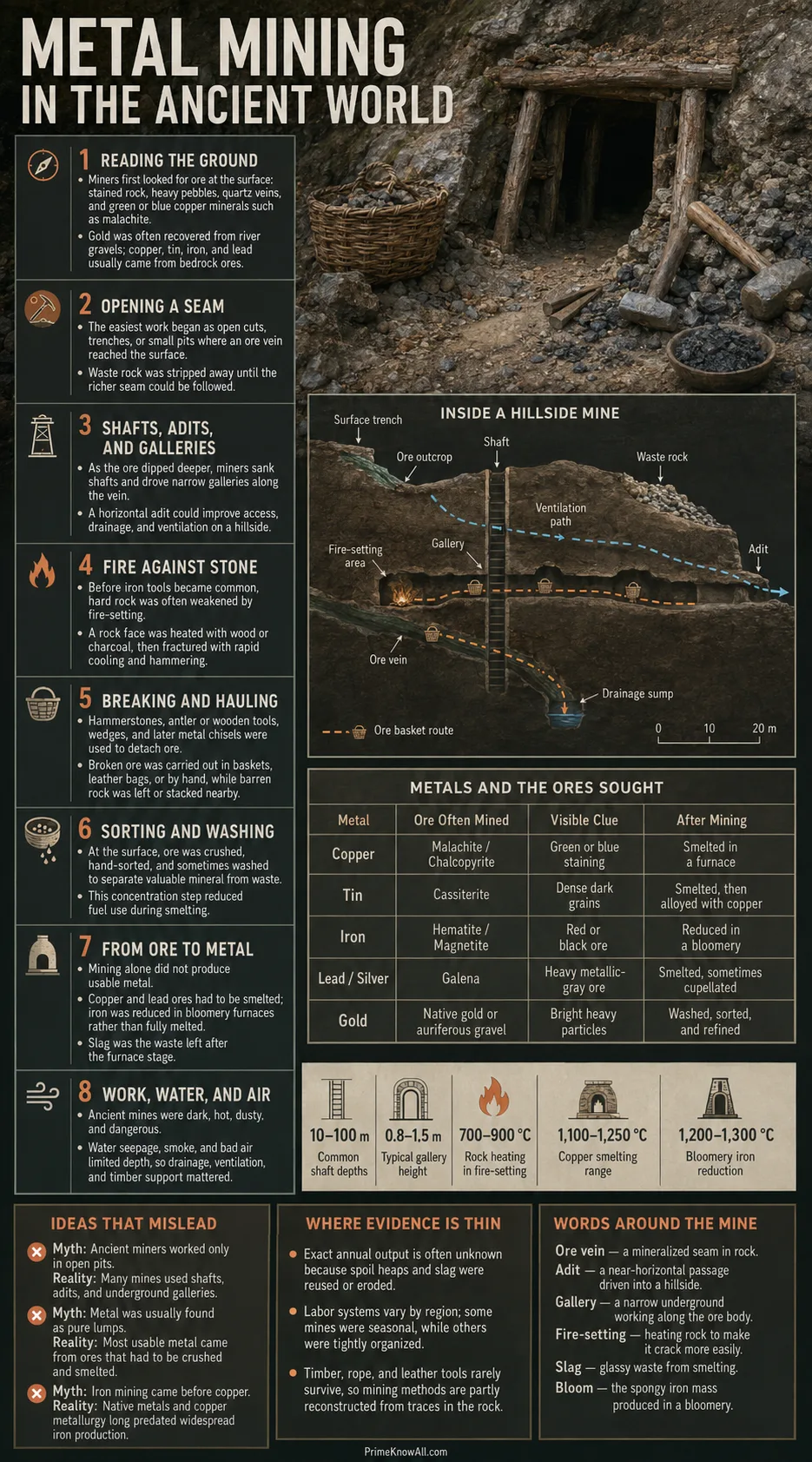
Ancient mining worked because people understood materials through practice. They did not need modern drills to notice that green copper ore, heavy black sand, silver-bearing lead ore, or red ironstone behaved differently when heated, washed, hammered, or broken.
Core Methods And Terms
- Ore is rock that contains enough useful metal to be worth working with the tools and fuel available at the time.
- Fire-setting means heating rock and then breaking it after thermal stress weakened it.
- Hushing used stored water to strip soil, reveal veins, or move loose material, especially in Roman mining landscapes.
- Smelting was separate from mining: mining removed ore; smelting used heat and chemistry to release metal from that ore.
- Slag, the stony waste from smelting, is now one of the best clues archaeologists use to read ancient metal production.
- Ancient mines were industrial places, not only holes in the ground. They needed tools, roads, fuel, water, air, storage, and skilled sorting.
What Ancient Metal Mining Really Meant
Ancient metal mining means the set of methods people used to find, remove, prepare, and move metal-bearing minerals before modern explosives, powered drills, and chemical processing. In practical terms, it sat between geology and craft: miners had to read the landscape, choose the right rock, and prepare ore for furnaces without wasting rare fuel.
The process changed by region and period, but the logic stayed recognizable. A miner first had to find an ore body, which is a natural concentration of metal-bearing minerals. Then the rock had to be opened, broken, sorted, crushed, washed, roasted, or smelted. The best operations reduced useless weight before transport because carrying poor ore over hills or desert routes was expensive in labor.
- Copper miners watched for green and blue minerals such as malachite and azurite.
- Gold workers looked in river gravels, quartz veins, and alluvial deposits where heavy particles settled.
- Silver and lead miners often worked galena, a dense lead sulfide that could carry silver minerals.
- Iron workers used ores such as hematite, magnetite, and laterite when furnace skill and fuel supply allowed it.
A useful definition: gangue is the unwanted mineral material mixed with ore. Ancient miners did not always have a formal word for it, but they understood the problem. Too much gangue meant more carrying, more fuel, more slag, and less metal.
How Miners Found Metal-Bearing Rock
Ancient prospecting worked through close observation. Miners used color, weight, fracture, smell when heated, local memory, and visible veins to decide where to dig. In dry regions, mineral staining on cliffs could be easier to read. In forested or soil-covered regions, watercourses, exposed slopes, and old rockfalls were better clues.
Some ores almost advertised themselves. Copper carbonates can show green and blue tones. Iron oxides can leave red, brown, or yellow staining. Gold is heavy and does not corrode easily, so it can survive as bright grains in river sediment. Silver is trickier because it may sit inside lead ore rather than appear as shiny metal.
- Color clues: green malachite, blue azurite, red hematite, yellow-brown limonite.
- Weight clues: dense minerals felt different in the hand or washing pan.
- Landscape clues: exposed veins, ancient streambeds, cliffs, fault lines, and weathered caps.
- Heat clues: some minerals changed color, smell, or texture near fire.
Conditions Beyond The Ore Body
- Ancient prospecting was evidence-based, even when it used local terms rather than scientific names.
- Visible ore was only the start; miners still had to test whether the rock could give enough metal.
- Good mining sites needed more than ore. They also needed fuel, water, paths, storage, and workers.
Main Mining Methods Used For Metals
The main ancient mining methods were surface collecting, open pits, shafts, adits, fire-setting, hydraulic washing, hushing, crushing, hand sorting, and ore washing. These methods were not used in one neat order everywhere. A small copper mine in a desert valley and a Roman gold field in Spain needed very different choices.
Surface Collecting And Shallow Pits
The earliest metal gathering often began with material already exposed at the surface. Native copper, gold grains, weathered copper minerals, and iron-rich stones could be collected before deep mining was needed. Shallow pits followed when workers traced the useful material below loose soil.
- Best for: visible copper ore, river gold, soft weathered deposits.
- Main tools: baskets, stone hammers, wooden levers, antler or bone tools in some regions.
- Main limit: once the visible ore ended, miners needed harder work and better planning.
Shafts And Adits
A shaft is a vertical or steep opening that gives access to deeper ore. An adit is a near-horizontal tunnel driven into a hillside. Adits were useful because they could drain water more easily than deep vertical shafts when the slope allowed it.
- Shafts helped miners follow ore down into the ground.
- Adits allowed access from a slope and could improve airflow.
- Galleries connected working areas underground.
Fire-Setting
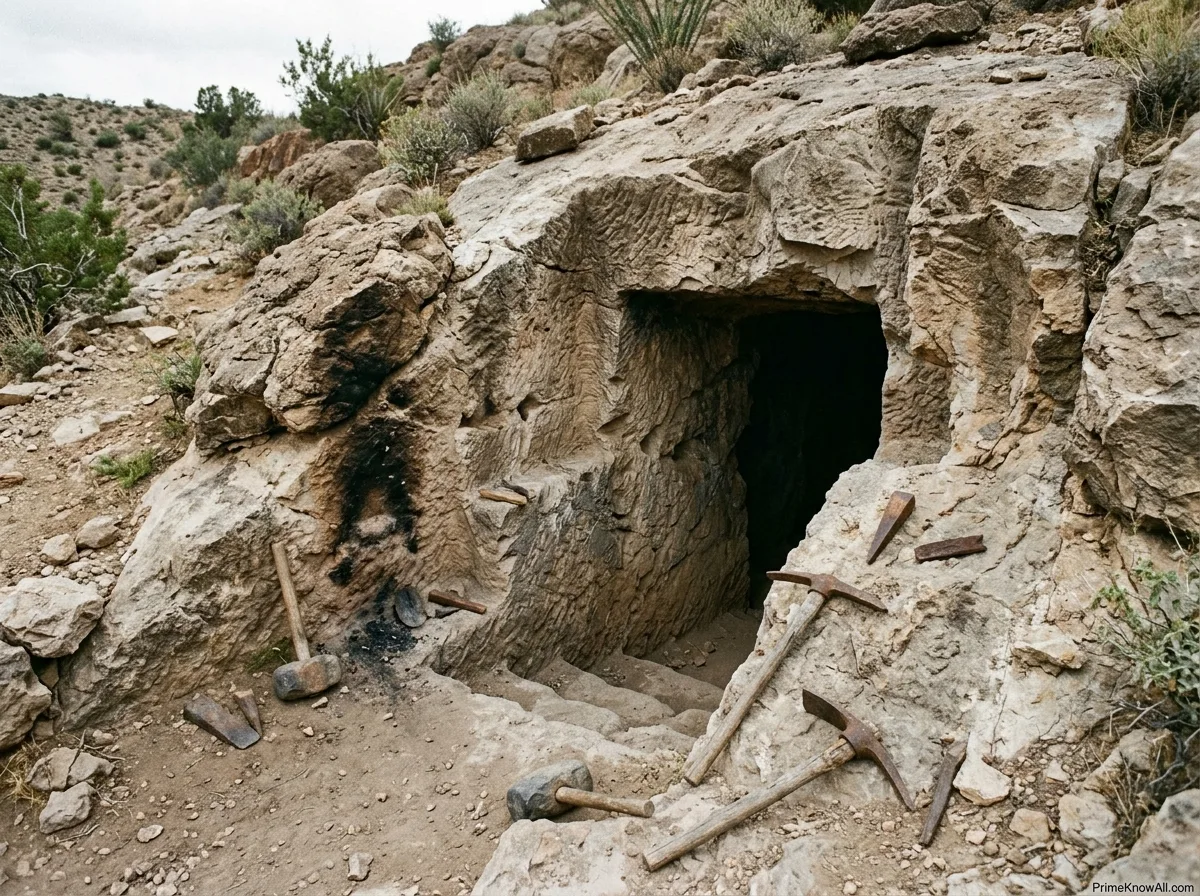
Fire-setting was one of the most useful hard-rock techniques before gunpowder. Workers built a fire against the rock face, let heat expand the outer layers, then broke the weakened stone with hammerstones, picks, or wedges. In some settings, cooling with water may have helped the cracking, but the method depended on rock type, fuel, ventilation, and the shape of the working face.
- Worked best where: rock fractured under heat and enough wood or charcoal was available.
- Created problems: smoke, heat, poor air, cracked ceilings, and heavy fuel demand.
- Left clues: reddened rock, spalled surfaces, charcoal traces, soot, and heat-altered stone.
A simple analogy helps: fire-setting was like pouring hot water on a very cold glass, except slower and aimed at stone. The goal was not to melt the rock. The goal was to make the rock give up its strength so tools could finish the job.
Hushing And Hydraulic Mining
Hushing used stored water released from above a slope to strip soil, expose ore veins, or move broken material. Roman mining at Las Médulas in north-west Spain shows how far this idea could go when canals, reservoirs, and labor were organized on a large scale.
- Water collected in reservoirs or channels above the working area.
- Sudden release cut through soil and loose stone.
- Exposed veins could then be dug, broken, or washed.
| Method | Best Use | Typical Tools Or Support | Main Limit |
|---|---|---|---|
| Surface Collecting | Native gold, native copper, visible ore pieces | Baskets, hand sorting, simple digging tools | Runs out once exposed material is collected |
| Open Pit Mining | Near-surface ore bodies and weathered deposits | Stone hammers, wooden levers, picks, baskets | Needs spoil removal and stable slopes |
| Shaft Mining | Ore that continues downward | Ladders, ropes, baskets, timbering where available | Water, air, collapse risk, and haulage effort |
| Adit Mining | Ore inside hillsides | Hammerstones, picks, lamps, drainage channels | Only works where terrain gives side access |
| Fire-Setting | Hard rock before explosives | Wood or charcoal, hammers, wedges, ventilation | Fuel demand, smoke, and heat damage |
| Hushing | Exposing veins and moving loose ground | Dams, channels, reservoirs, sluices | Needs water supply and suitable slopes |
| Ore Washing | Separating heavy mineral grains from lighter waste | Water, troughs, pans, settling areas | Less useful for ore locked tightly in hard rock |
How Ore Became Usable Metal
Mining did not end when rock left the ground. The ore had to be prepared. Ancient workers sorted it, crushed it, washed it, roasted it when needed, and smelted it in furnaces. This preparation step mattered because furnaces could fail if ore was too poor, too wet, too mixed, or too large.
Smelting is a heat-and-chemistry process that separates metal from ore. It is not the same as melting a metal object. In copper smelting, for example, heat, carbon from fuel, air flow, and furnace design helped change mineral compounds into metal and slag.
- Sorting: workers kept richer pieces and rejected obvious waste.
- Crushing: ore was broken into smaller pieces so heat could reach it better.
- Washing: water helped separate heavy useful particles from lighter waste.
- Roasting: some ores were heated in air before smelting to drive off sulfur or change the mineral.
- Smelting: furnace heat released metal and formed slag.
Mining And Metallurgy Are Different
- Mining removes ore from the ground.
- Metallurgy turns that ore into metal and shapes it for use.
- Archaeometallurgy studies ancient metal production through ore, tools, furnaces, slag, objects, and chemical traces.
The Rock-To-Metal Chain
A mine was part of a longer chain. The following vertical layout shows how a metal object could begin as colored stone in a hillside and end as usable material. Each step left traces that archaeologists can still study.
1. Ore Is Noticed
Green copper minerals, heavy river grains, red ironstone, or dark lead ore signal that a place may be worth testing.
2. The Deposit Is Opened
Workers use surface pits, shafts, adits, or trenches depending on slope, depth, rock strength, water conditions, and the direction of the ore body.
3. Ore Is Broken And Sorted
Hammerstones, picks, wedges, and fire-setting reduce the rock. Richer pieces are separated from obvious waste before unnecessary weight is moved farther.
4. Ore Is Crushed Or Washed
Smaller fragments expose more mineral surface, while washing can separate dense metal-bearing particles from lighter material where the ore type allows it.
5. Ore Is Prepared For The Furnace
Selected material may be dried, roasted, or sorted again so that the furnace receives ore with fewer unwanted minerals and a more manageable particle size.
6. Metal Is Smelted And Worked
Heat, fuel, air flow, and furnace chemistry separate metal from slag. The recovered metal can then be refined, alloyed, cast, or hammered for use.